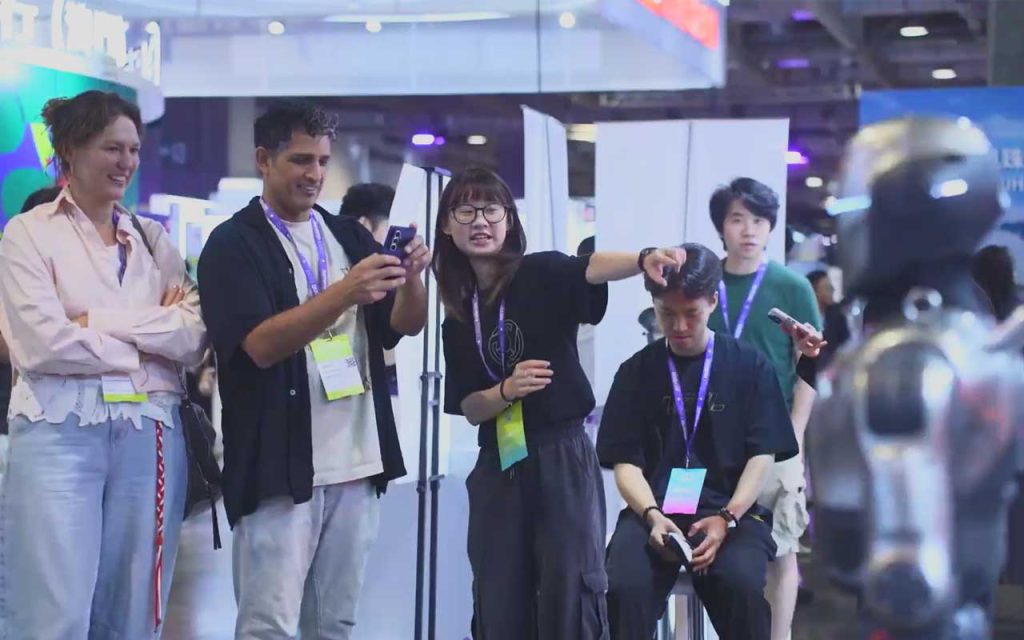
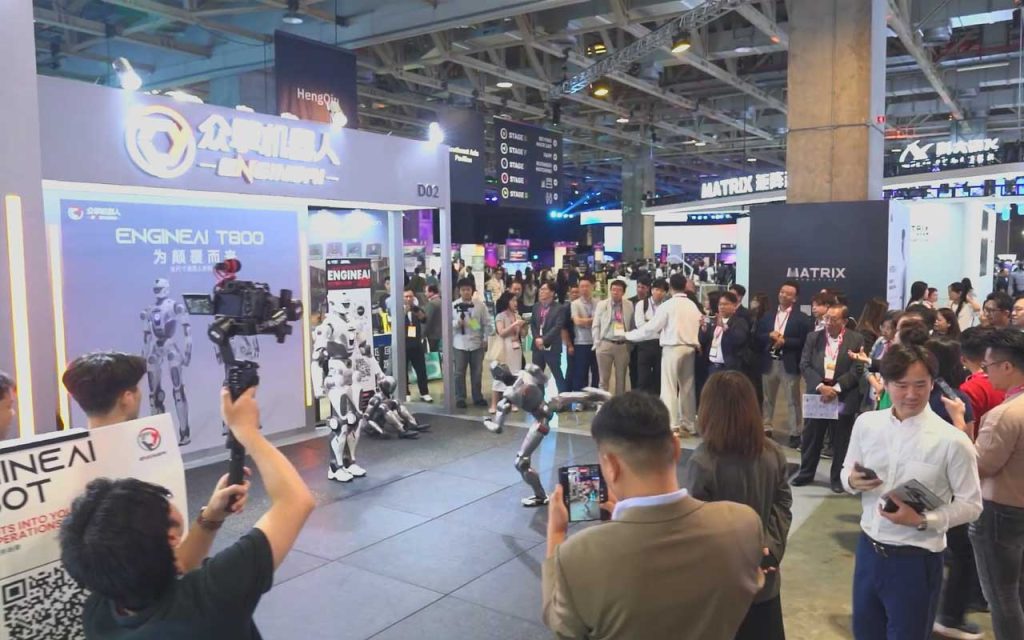
At many global tech events, Korea is usually described through familiar names: Samsung, LG, Hyundai, SK, K-pop, gaming, and consumer electronics. But at BEYOND Expo 2026 in Macao, Korea tried to widen that image. Its message was quieter than the humanoid robots walking across the exhibition floor, but more strategic for founders: Korea aims to become a place where global startups can test industrial AI, enter Asia, and connect with real operating industries.
Korea’s BEYOND Expo Message Moved Beyond Startup Promotion
BEYOND Expo 2026 closed in Macao after a four-day program built around the theme “AI: Digital to Physical.”
This year’s edition of the expo featured nearly 800 exhibitors, over 500 international and leading technology media, and an opening ceremony attended by more than 1,000 guests representing China, the EU, the Middle East, Southeast Asia, South America, the UK, the US, and many other markets.
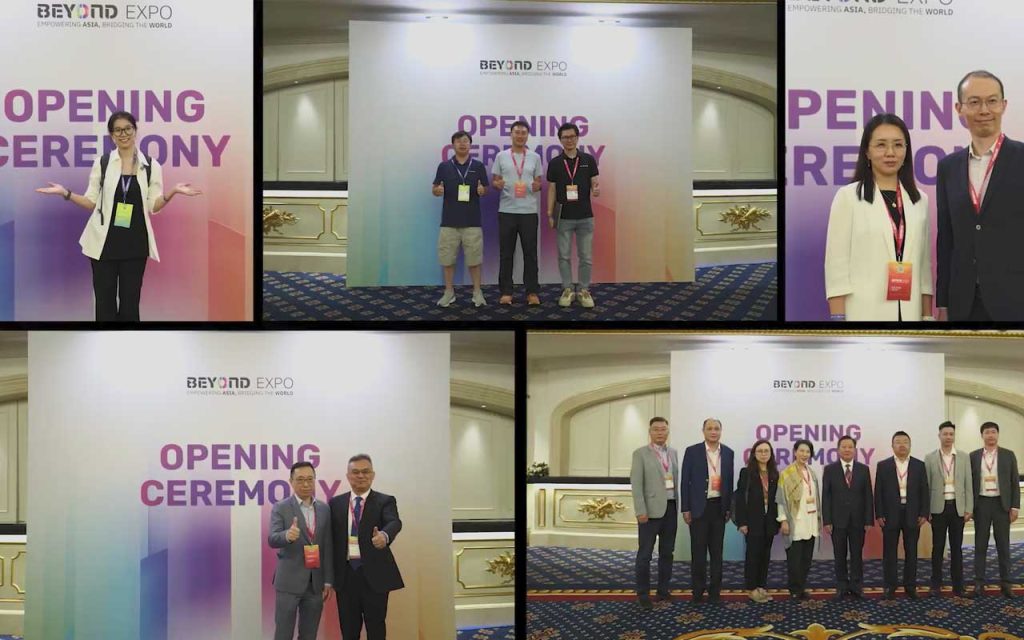
Not only that but Korea’s participation has also added a more specific layer to that broader discussion. During the Korea Technology Forum, Korean national agencies, local governments, startup support institutions, media representatives, academics, and companies presented Korea not only as a startup exporter, but also as a landing base for foreign startups and industrial AI companies seeking real-world validation.
Amid discussions about robotics, artificial intelligence, and emerging technologies, Korea’s representatives focused on a different question: where can these technologies actually be tested, adopted, and scaled?
The answers presented throughout the forum pointed toward Korea’s startup support infrastructure, regional industrial clusters, research institutions, and manufacturing base as potential advantages for founders looking to build beyond the prototype stage.
KISED Presented Korea’s Startup Entry Pathway for Foreign Founders
The clearest policy message came from Choi Jae-sung, Director at the Korea Institute of Startup & Entrepreneurship Development, or KISED, an agency under Korea’s Ministry of SMEs and Startups. Speaking at the Korea Technology Forum of BEYOND Expo 2026, Choi positioned Korea as a global startup hub built around innovation capacity, market potential, and government-backed support.
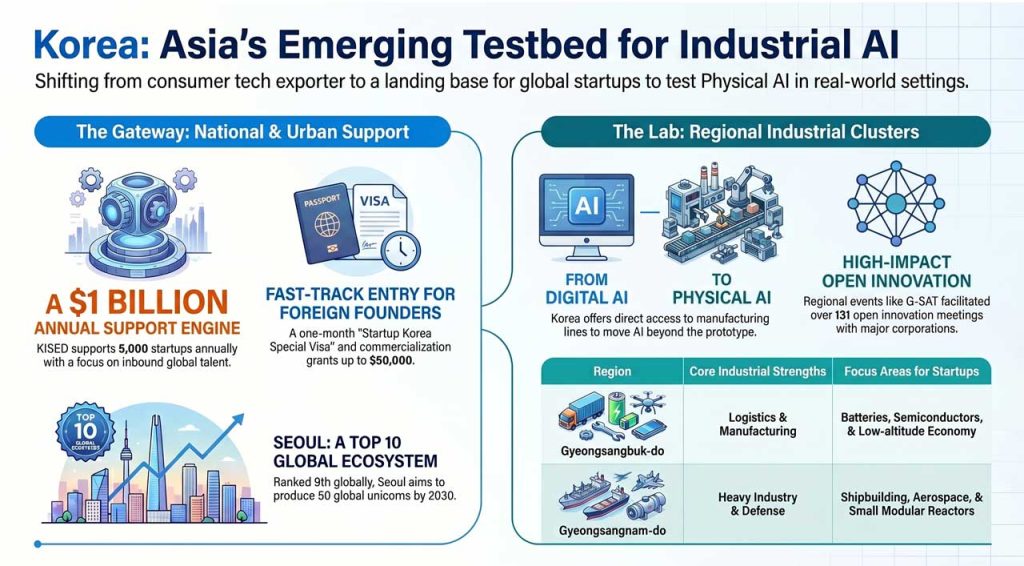
According to Choi’s presentation, KISED operates with an annual budget of about USD 1 billion and supports around 5,000 startups each year. He also noted that KISED has accumulated support for approximately 80,000 startups, reflecting the scale of Korea’s public startup infrastructure.
For foreign founders, the most practical part of the presentation was KISED’s explanation of Korea’s inbound startup support channels. Choi highlighted the K-Startup Grand Challenge as the agency’s flagship acceleration program, noting that it receives more than 2,000 applicants each year and selects around 80 startups.
He also pointed to the Global Startup Center, which supports foreign founders with business incorporation, visa guidance, consulting, living support, seminars, and networking. In addition, KISED introduced commercialization support of up to USD 50,000 for selected startups with strong potential in Korea, along with the Startup Korea Special Visa, described as a fast-track visa route that can be processed in about one month.
This is where Korea’s pitch becomes more concrete. The country is not only asking foreign startups to attend events or meet investors. At BEYOND Expo 2026, Korea is presenting a structured entry pathway that combines visa support, incorporation guidance, market validation, grants, acceleration, and local networking.
Considering how Korea can be difficult for foreign startups because of language barriers, corporate decision-making structures, and local trust requirements, Choi’s presentation at BEYOND Expo 2026 offered an insight that Korea’s startup policy is now increasingly focused on soft-landing infrastructure, not only funding.
Korea’s Regions Are Competing Through Industrial Testbeds
The forum also showed how Korea’s regional governments are positioning themselves inside the industrial AI cycle. During the Korea Technology Forum, Lee Na-ni, Director of Airport and Investment at Gyeongsangbuk-do, presented the province as a manufacturing and logistics base with direct relevance to AI-driven industry.
North Gyeongsang (Gyeongsangbuk-do) described as Korea’s largest local government by area and emphasized its role in logistics, manufacturing, batteries, semiconductors, automotive parts, and airport infrastructure. Lee highlighted the province’s 162 industrial parks and pointed to cooperation opportunities in low-altitude economy, logistics, secondary batteries, semiconductor materials and components, and automation linked to Physical AI.
The province also described investment as part of its regional strategy. Lee said Gyeongsangbuk-do has been building financial platforms with major institutions and exploring ways to connect companies with investment funds, industrial partners, and cross-border cooperation opportunities.
In contrast, South Gyeongsang (Gyeongsangnam-do) brought a different industrial profile. Kang Moon, an official from Gyeongsangnam-do’s Startup Support Division, introduced the province as one of Korea’s major manufacturing regions, with strengths in shipbuilding, machinery, defense, aerospace, nuclear energy, and small modular reactor-related industries.
Kang also positioned G-SAT, Gyeongsangnam-do’s startup event, as a platform connecting startups, large companies, investors, and global institutions. According to his presentation, this year’s G-SAT attracted more than 8,000 visitors, with 378 investment consultations, 131 open innovation meetings, 128 startups, 69 investment firms, 24 major and mid-sized companies, and participants from 14 countries and 40 overseas institutions.
These details point to a practical shift in Korea’s regional startup strategy. Local governments are no longer presenting themselves only as places with land, factories, or incentives. They are increasingly trying to act as industry-linked commercialization platforms.
And for industrial AI startups, this distinction matters. Robotics, smart manufacturing, agritech, energy systems, mobility, and health technologies usually need more than capital. They need pilot sites, procurement conversations, safety testing, local partners, and real customer feedback.
Seoul Added the R&D and Global Startup City Layer
Meanwhile, Seoul Business Agency, or SBA, positioned Seoul as the innovation gateway within Korea’s broader startup ecosystem.
SBA then referred to Startup Genome’s 2025 ranking, where Seoul was placed ninth among global startup ecosystems. It also pointed to Seoul’s 2030 goal of becoming a top-five global startup city and producing 50 global unicorns.
Moreover, the agency emphasized Seoul’s R&D support programs, intellectual property support, and startup infrastructure across the city. It also presented companies participating through its Seoul Innovation Challenge track at BEYOND Expo, including MarkCloud, Telecons, Healing Sound, and Digitalcurve.
MarkCloud presented AI-powered brand risk intelligence for global expansion. Telecons introduced SafeNear, an on-device AI senior safety solution. Healing Sound presented an ear health management device. Digitalcurve described Physical AI for smart agriculture, combining drone data, GIS, greenhouse control, and crop intelligence.
Together, these companies reflected Korea’s preferred industrial AI direction. The emphasis was not only on AI models. It was on applied systems linked to aging, agriculture, brand protection, medical-adjacent devices, and operational workflows.
Jason Ho’s Korea Thesis Became More Visible After the Event
In KoreaTechDesk’s earlier interview, BEYOND Expo Co-Founder Jason Ho framed Korea as a major player in the physical AI cycle.
“Korean companies are leading the charge in Physical AI,”
Ho said, pointing to Korea’s strength in robotics, semiconductors, and deep tech.
He also described Korea as an “Innovation Engine” within Asia’s cross-border ecosystem, arguing that Korean startups need platforms that connect them with capital, supply chains, and distribution networks across the Greater Bay Area and Southeast Asia.
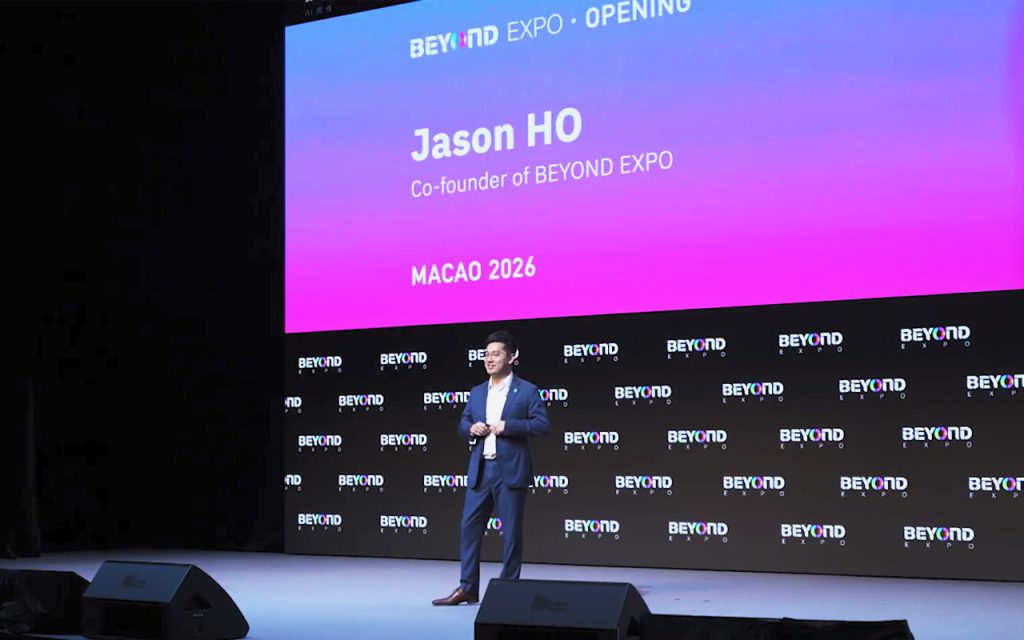
After the Korea Technology Forum, that thesis eventually looked more grounded. Korea did not just mark its presence at BEYOND Expo 2026 through startups. The country has also strengthened its position during the event through policy agencies, local governments, regional industrial clusters, R&D programs, and startup support institutions.
That matters because physical AI is difficult to scale through pitch decks alone. It requires real operating environments. Therefore, Korea’s potential advantage lies in the density of manufacturing partners, corporate buyers, testing environments, R&D support, and industrial cities that can help startups move closer to actual deployment.
BEYOND Expo 2026 Showed That Market Entry Still Depends on Local Execution
Still, Korea’s positioning should not be read as a finished success story. The Korea Technology Forum has indeed showed the country’s ambition, but global founders will judge Korea by what happens after the forum: access to partners, pilot projects, corporate buyers, regulatory guidance, and repeatable market-entry pathways.
And that challenge was not unique to Korea. Across BEYOND Expo 2026, multiple sessions returned to the same point: advanced technology does not scale through visibility alone. At the Global Investment Summit, investors discussed hardware moats, data, manufacturing capability, founder quality, supply chain access, and global execution as core factors shaping the next generation of AI and robotics companies.
Several speakers also pointed to a harder reality behind global expansion. Startups entering new markets need localization, trusted partners, local teams, regulatory understanding, and cultural adaptation. Technology may open the door, but commercial trust still has to be built market by market.
The Creator Summit delivered the same lesson through audience behavior. Creators working across Indonesia, Brazil, Europe, North America, and China emphasized that audiences cannot be treated as one global block. Indonesia alone was described as a market working completely different even between cities. Therefore, Jakarta and Bali require different content logic, and it shows how deeply local trust and relevance can shape adoption.
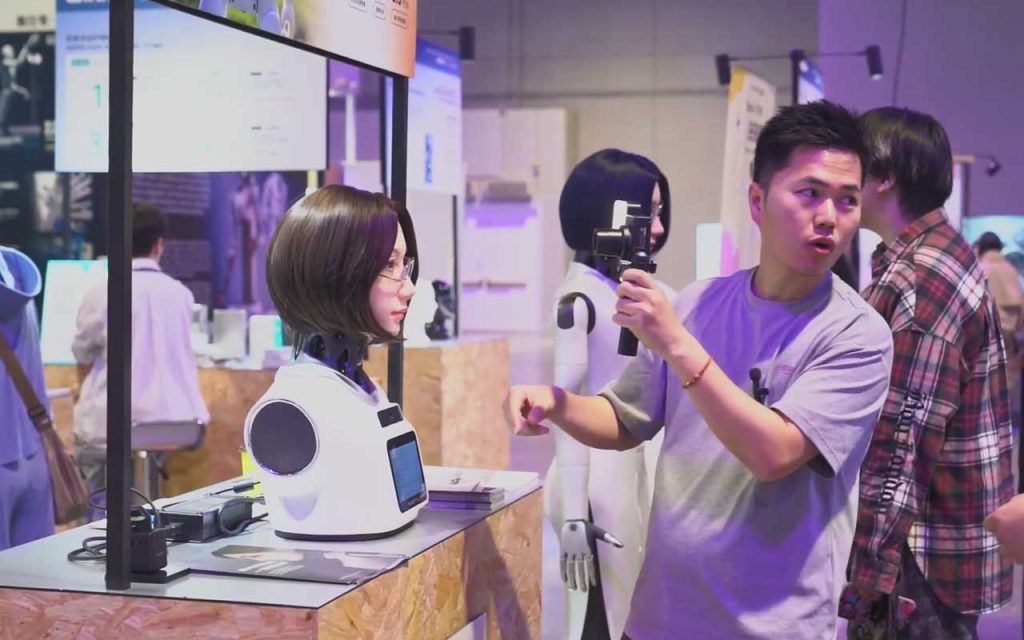
This is where 2026 BEYOND Expo’s broader value becomes clearer. The event did not only gather AI companies, investors, creators, and public institutions in one place. It exposed the same bottleneck across different industries: products, capital, and policy are not enough unless founders can translate them into local demand.
For Korea, that means government programs, regional funds, and industrial clusters are strong entry points, but they still need to become easier for global founders to navigate.
So, if Korea wants to strengthen its position as Asia’s industrial AI testbed, the next task is now becoming even more practical: clearer English-language access, better pilot pathways, stronger corporate matching, and smoother bridges between policy support and real customer adoption.
Korea’s Real Test Starts After BEYOND Expo 2026
Finally, the BEYOND Expo 2026 put Korea in front of the global innovation community. Still, a mere visibility is not victory.
The real test now begins after Macao, when founders decide where to build, pilot, hire, and scale—and Korea must compete head-to-head with Singapore, Japan, Shenzhen, Hong Kong, Dubai, and the broader Southeast Asian market for that commitment.
At the same time, Korea’s most compelling advantage lies not merely in another startup initiative or funding program. It is on the ability to offer something many ecosystems cannot: direct access to world-class industrial environments where AI can move beyond demos and prove its value under real operational pressure.
With the country’s manufacturing lines, logistics networks, and its agriculture, mobility, healthcare, and advanced hardware, Korea positioned itself as a place where emerging technologies can be validated, adopted, and scaled in the real economy.
Hence, as BEYOND Expo continues to position itself as a meeting point for Asian innovation and global partners, Korea now has an opportunity to turn visibility into practical ecosystem access.
If it can connect foreign founders to industrial environments with speed, trust, and clear support, Korea’s role in Asia’s startup ecosystem may eventually become much more valuable than event participation alone.
Key Takeaway
- South Korea was presented at BEYOND Expo 2026 Korea Technology Forum as a leading testbed for industrial AI, robotics, smart manufacturing, and advanced hardware.
- KISED highlighted key programs for foreign founders: K-Startup Grand Challenge, Global Startup Center Korea, commercialization support of up to USD 50,000, and the Startup Korea Special Visa.
- Gyeongsangbuk-do promoted strengths in logistics, batteries, semiconductors, mobility, and manufacturing, while Gyeongsangnam-do focused on shipbuilding, aerospace, defense, nuclear energy, and startup-industry collaboration.
- Seoul Business Agency positioned Seoul as Korea’s startup gateway, citing its #9 ranking in Startup Genome’s 2025 global startup ecosystem report and its goal to become a top-five startup city by 2030.
- Featured Korean startups demonstrated applied AI use cases in brand risk intelligence, senior safety, ear health, and smart agriculture.
- Discussions at the Global Investment Summit and Creator Summit emphasized four requirements for international expansion: localization, trusted partners, customer validation, and cultural understanding.
- A key challenge is execution: global founders still need easier access to Korea’s public programs, regional ecosystems, and corporate networks.
- Korea’s strongest opportunities for global startups are in industrial AI, robotics, manufacturing, agritech, health tech, mobility, logistics, and advanced hardware.
– Stay Ahead in Korea’s Startup Scene –
Get real-time insights, funding updates, and policy shifts shaping Korea’s innovation ecosystem.
➡️ Follow KoreaTechDesk on LinkedIn, X (Twitter), Threads, Bluesky, Telegram, Facebook, and WhatsApp Channel.
🤝 Looking to connect with verified Korean companies building globally?
Explore curated company profiles and request direct introductions through beSUCCESS Connect.